
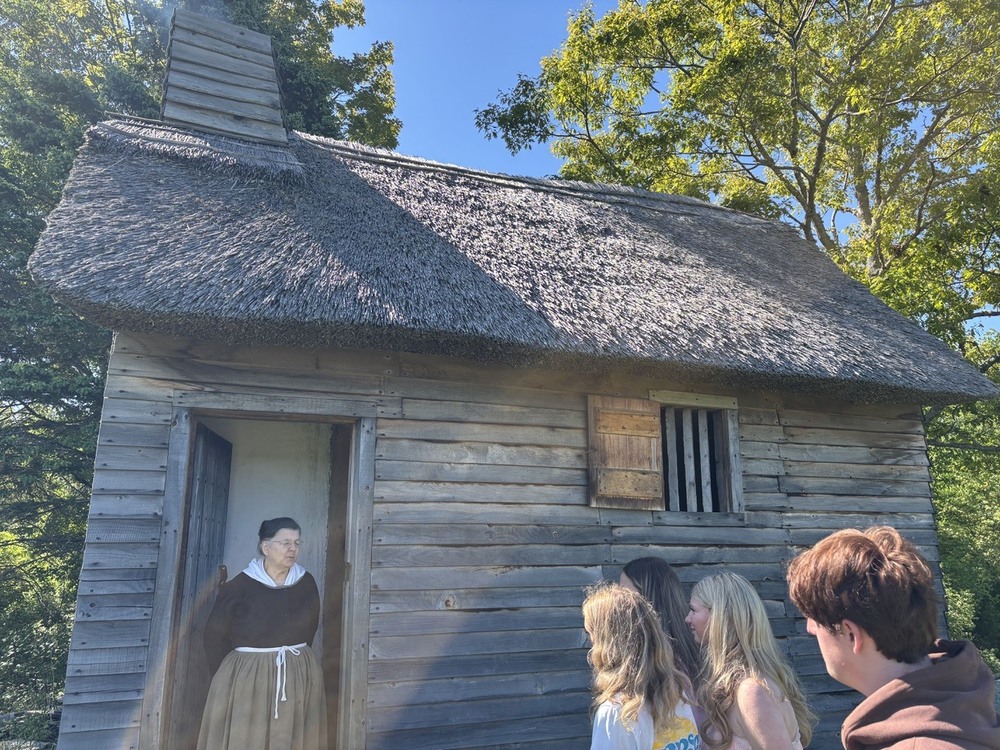
Lincoln County Historical Association Invites Wiscasset AP U.S. History Students
Wiscasset AP U.S. History students were hosted by the Lincoln County Historical Association at the Colonial Pemaquid Historic Site, where they were offered a unique portrayal of a 17th-century English fishing community.
Students visited with presenters who shared the roles of 17th-century fishermen, discussing the coastal fishing stations and how fish were processed for market. They toured the fisherman's house, viewed the living quarters, spoke with a colonial blacksmith working at his forge, and learned about the present-day work of the archaeologists on site.
In the early 1600s, the Pemaquid area was settled by English fishermen and fur traders who established some of the earliest permanent coastal stations. The colonial forts stood at a strategic location in Bristol, Maine, fiercely contested by the English, French, and Abenaki. The site was heavily fortified and home to a thriving fishing community, but it was repeatedly destroyed by the French and their Native American allies. Often forgotten, the early colonial Pemaquid fishing settlement helped feed Plymouth Colony (established 1620) during the winter months, helping the colonists avoid starvation. By the 1600s, the Pemaquid fishing community was selling cod throughout England, Europe, and the Mediterranean.