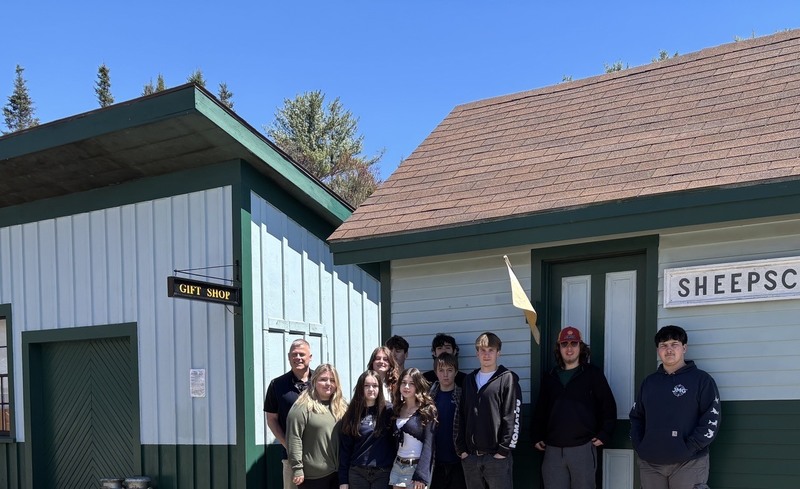
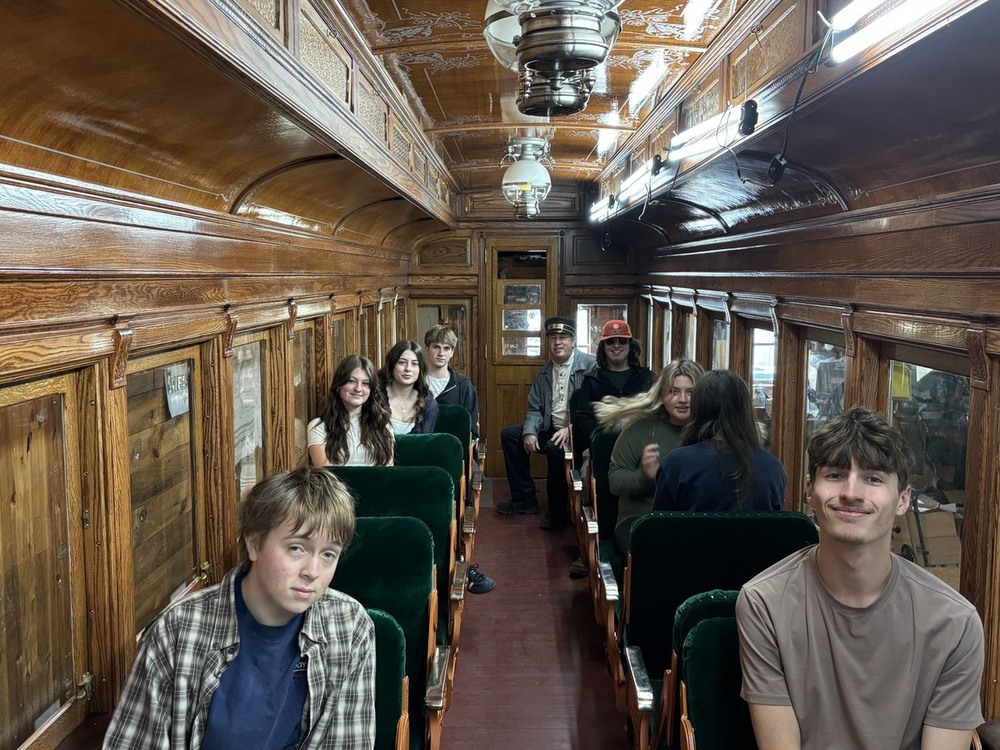
WW&F Railway Museum Welcomes Wiscasset History Students
The Wiscasset, Waterville & Farmington (WW&F) Railway Museum in Alna hosted WMHS American History students, learning about the rapid economic and technological transformation of Maine's midcoast region in the late nineteenth century.
Kirra Lahaye, WMHS American History student described the serenity of a train ride, “When we went on the WW&F tour it was a really nice, calming experience. Even though it was calming, I learned a lot about the WW&F railway, for example, the railway started in 1894, and it was constructed to be a two feet narrow railroad because it was much cheaper to make rather than a four feet railroad.”
Ed Lecuyer, WW&F provided an informative tour of the railroad history and the economic importance to rural communities in Alna, Whitefield, Coopers Mills and Albion in the late 19th century and early 20th century.
Lecuer stated, “The WW&F Railway traces its roots to 1894 when the Wiscasset and Quebec Railroad constructed a two-foot “narrow” gauge railroad northward from the bustling port of Wiscasset Harbor, the railway of “big dreams and little wheels”.
Emma Bailey, a WMHS student appreciated the WW&F Railway tour, “The museum is like no other with the working machinery, so you get the full experience. I learned how important the railroad was for people back then and how much they relied on it to get to places like work and school.”
The Wiscasset, Waterville and Farmington Railroad used narrow gauge railways two feet in width which is substantially smaller than the standard gauge of four feet and eight inches. This allowed the smaller trains to travel on tight curves and difficult terrain. The cost of construction was 80% less expensive and easier to maintain, serving rural lumber and farming communities in Maine.
Paul Lambert learned, “The railroad system was primarily used by Wiscasset, Alna, Whitefield and Albion. People used the railroad system to get around and go places, and it was a narrow ridge railroad only being two foot wide.”